
Significant Results and an Amazing Learning Opportunity
If you follow what is described in this article, there is a genuine possibility that it will become a life‑changing experience for you.
Not because an AI-assisted ketogenic diet is magical. Not because artificial intelligence is revolutionary. But because this process forces you to experience your own metabolism consciously, rather than living on dietary autopilot.
As a medical doctor, I believe that—unless clear contraindications exist—every adult should experience a structured ketogenic diet at least once, not as a lifestyle choice, but as an educational and biological experiment. The physiological journey, the insights into hunger, energy, sleep, and insulin, and the clarity gained through AI guidance can permanently change how you understand food, health, and your own body.
Why I Did AI-Assisted Ketogenic Diet as a Doctor
I am a doctor with nearly three decades of clinical experience. Over the years, I have observed how modern dietary patterns quietly but relentlessly undermine metabolic health. Despite a solid academic understanding of human biology, my own 10‑day ketogenic diet surprised me in ways no textbook ever could.
We live in a world of constant food availability, frequent snacking, and carbohydrate‑heavy meals. This environment keeps insulin persistently elevated, pushing many people toward insulin resistance, obesity, type 2 diabetes, fatty liver disease, cardiovascular disease, and ultimately higher all‑cause mortality. This is not theoretical; it is what I see clinically.
I am not exempt from this reality. None of us are.
From time to time, I deliberately interrupt my glucose‑insulin system. I have tried intermittent fasting, calorie‑restricted diet approaches, and even water fasting. However, prolonged fasting—eating nothing at all—proved psychologically and practically difficult for me.
The ketogenic diet offered a compelling alternative. Unlike fasting, the diet allows you to eat. Unlike many diets, ketosis is objectively measurable. You are either in ketosis or you are not. This clarity makes the ketogenic diet an excellent educational framework rather than just another diet plan.

What follows is not a protocol to copy blindly, but a framework you are invited to experience consciously and responsibly.
Before You Start: A Necessary Safety Note
Although the ketogenic diet can be effective, it is not appropriate for everyone. If you are pregnant or breastfeeding, have type 1 diabetes, a history of eating disorders, chronic kidney disease, or take certain medications (including insulin or SGLT2 inhibitors), you must consult your GP or treating clinician before starting a ketogenic diet.
This article is educational, not medical advice. Individual responses vary, and the responsibility for following a keto diet rests entirely with the individual. Neither the author nor any AI tool can be held responsible for adverse outcomes arising from independent implementation.
Choosing Your Ketogenic “Dose”: How Long and Why
Not everyone needs the same type of diet or duration of dietary intervention. The effects of a ketogenic diet depend strongly on time.
A short 3–4‑day ketogenic phase can provide an initial glimpse into carbohydrate dependence, early metabolic switching, and appetite changes. It can be interesting, but it is limited. Personally, I do not recommend stopping here; the next, slightly longer phase offers far greater insight.
A 7–10‑day ketogenic diet—what I personally chose this time—is where the experience becomes transformative. Many people report dramatic sleep improvement, a reduction or complete disappearance of hunger, and periods of remarkably clean, steady energy. Sodium balance becomes obvious, hydration needs change, and the uncomfortable middle phase appears. Those who persevere often describe a sense of metabolic calm and mental clarity that feels profoundly different from a normal diet.
A 14–21‑day ketogenic diet moves into therapeutic territory. In people with metabolic syndrome, obesity, or people with type 2 diabetes, this duration may help reduce insulin resistance, liver fat, and metabolic inflammation. Ketogenic diets in the treatment of metabolic disease should be approached carefully, often with medical supervision.
The longer the duration, the less this is “following a keto diet” and the more it becomes diet therapy.
Understanding the Ketogenic Diet in Context
The standard ketogenic diet is a low‑carbohydrate, high‑fat diet that shifts the body from glucose metabolism to fat‑derived ketone production. There are different types of ketogenic diets, including the classical ketogenic diet, modified ketogenic diet, targeted ketogenic diet, cyclical ketogenic diet, and high‑protein ketogenic diet. All are variations on the same metabolic theme: carbohydrate restriction.
Like the Atkins diet, the ketogenic diet limits carbohydrates far more than a typical low‑fat diet or Mediterranean diet. This is why ketogenic diet causes such distinct physiological effects.
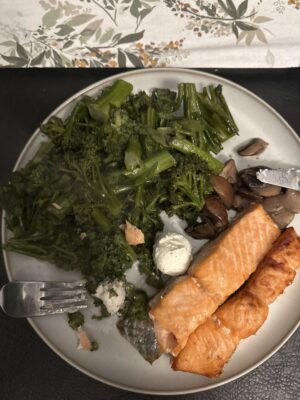
Although the ketogenic diet may help in certain contexts, it is not a balanced diet long term. Medical evidence suggests that a varied and balanced diet remains the healthiest long‑term approach for most people.
Why the AI-assisted Ketogenic Diet Is Such a Powerful Learning Tool
Most people never truly feel their metabolism. Hunger, fatigue, and cravings are managed with constant food intake rather than understanding.
Following a ketogenic diet forces awareness. You learn what happens when carbohydrates disappear. You notice hunger patterns change. You experience stable energy without frequent feeding. You feel what low insulin actually means. Sodium, hydration, and electrolyte balance suddenly matter.
Adaptation is uncomfortable. This discomfort is the lesson.
AI transforms this phase. Through clarity and excellent explanation, AI holds your hand, helping you interpret symptoms, anticipate changes, and understand the biology behind every sensation. Without AI assistance, I would have quit.
My 10‑Day Experience: The Reality, Not the Marketing
The first two days were surprisingly easy. Energy was high, mental clarity improved, and motivation surged.
Day four was brutal. I experienced profound weakness, nausea, and near‑functional collapse. Water did not help. Food did not help. As a doctor, I still failed to identify the problem.
The solution was salt. Without the clarity provided by AI, I would not have recognised sodium depletion. Without exaggeration, AI saved the experiment. Correcting sodium resolved what many call keto flu—revealing it to be largely an electrolyte issue.

By days six and seven, sleep improved dramatically. Hunger quietened. Mental calm increased. Exercise performance remained reduced, illustrating how slowly muscles adapt to ketone utilisation.
By day ten, I felt stable, clear, and deeply educated.
What I Gained Physiologically From 10 Days of Ketosis
Beyond subjective experience, the ketogenic diet produced clear physiological effects over the 10-day period. I experienced modest but genuine weight loss, largely driven by reduced insulin levels, glycogen depletion, and improved metabolic flexibility rather than muscle loss.
Insulin resistance improved, reflected in more stable glucose control and a reduced need for frequent food intake. Periods of low insulin allowed autophagy to increase, particularly in the later days, supporting cellular repair processes that are largely absent in a constantly fed state.
Sleep quality improved dramatically, likely due to reduced nocturnal glucose and insulin fluctuations, lower sympathetic tone, and more stable energy availability to the brain.
Hunger signalling became quieter and more predictable, demonstrating how strongly appetite is driven by carbohydrate intake rather than true energy deficiency.
Taken together, these effects of a ketogenic diet illustrate why, although the ketogenic diet is not suitable as a long-term diet, short, well-structured ketogenic phases can be an effective metabolic reset and a powerful learning tool.
What I Gained (and What I Didn’t)
I did not gain superhuman athletic performance. High‑intensity exercise suffered.
What I gained was more valuable: insight.
I understood insulin suppression, sodium physiology, hunger signalling, sleep regulation, and metabolic flexibility. I lost fat without rebound. My sleep improved so profoundly that it permanently changed my behaviour. I now routinely eat a ketogenic‑style, very low‑carbohydrate dinner to minimise glucose‑related sleep disruption.
This was not a shortcut. It was education. Perhaps unexpectedly, the experience also strengthened my confidence in tolerating discomfort and uncertainty — a skill that extends far beyond diet.
How to Transition Back Without Losing the Benefits
Transitioning out of ketosis matters. A sudden return to a carb diet can cause fatigue, poor sleep, and discomfort.
A gradual approach—carbohydrates earlier in the day, low‑carb dinners, continued attention to sodium—works best. AI is invaluable here, helping interpret reactions and avoid common mistakes.
A Final Reflection
Although the ketogenic diet has been proven effective in specific contexts, medical evidence suggests it is unsuitable as a long‑term permanent diet for most people.
As a temporary intervention, however, the ketogenic diet can be effective, educational, and transformative. It teaches patience, biological humility, and metabolic awareness.
What surprised me most was not the physiology alone, but how powerful it was to think through this process consciously, supported by AI.
That is where the final chapter begins.
How to Use AI to Assist You During Your Ketogenic Diet
One of the most surprising aspects of my 10-day ketogenic diet was not only the biological learning, but how powerful AI can be as a real-time educational and decision-support tool.
Used properly, AI does not tell you what to do. It helps you understand what is happening, why it is happening, and what your sensible options are at each stage.
Below is a simple, practical way to use AI (I will use ChatGPT as an example, but the principles apply to other AI tools as well) to safely and effectively navigate a ketogenic diet.
You can do this on your phone or computer, using the free or paid version, with no technical background.
Step 1: Create a Dedicated Ketogenic Diet Project
Open ChatGPT.
On the left-hand side, click “New Project” and give it a clear name, for example: MyKetogenicDiet

This keeps all your questions, files, and learning in one place, instead of mixing them with unrelated conversations. Save the project.

Step 2: Upload the Two Essential Files
Inside your project, you will see the option to upload files. You should upload two documents:
1. Your Completed Personal Keto Questionnaire
Download the questionnaire from here. Fill it in honestly and completely. Save it on your device. Upload the completed version to your project.

This allows AI to understand you better. Without this information, advice will always remain generic. With it, guidance becomes context-aware and personalised, safe and effective.
2. The Ketogenic Diet Research Document
Also, download the ketogenic diet research document here and upload it to the same project. This document provides scientific background, safety considerations, physiological explanations, realistic expectations. AI will use this as a knowledge base when answering your questions.
Important Caveat: The Example Research Document Is Based on My Situation
The provided research document reflects a mid-aged, metabolically healthy individual using a ketogenic diet as an educational and metabolic reset. If your situation is very different — for example you are significantly overweight, living with metabolic syndrome, type 2 diabetes, much younger or much older, on long-term medication — then I strongly encourage you to create a tailor-made research document instead of relying on mine.
Step 3: Create Your Own Personalised Research File (Advanced but Simple and Powerful)
In ChatGPT, start a new chat (outside your project).
Click the “+” icon, choose Deep Research, and paste the following prompt. You should adjust the age, condition, and goals to suit your situation.
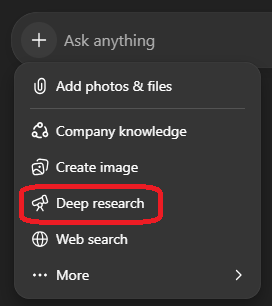
Deep Research Prompt (Copy & Paste)
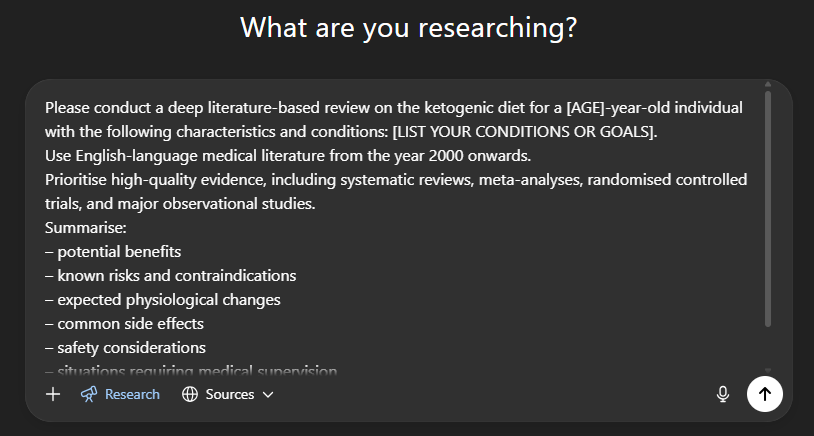
“Please conduct a deep literature-based review on the ketogenic diet for a [AGE]-year-old individual with the following characteristics and conditions: [LIST YOUR CONDITIONS OR GOALS].
Use English-language medical literature from the year 2000 onwards.
Prioritise high-quality evidence, including systematic reviews, meta-analyses, randomised controlled trials, and major observational studies.
Summarise:
– potential benefits
– known risks and contraindications
– expected physiological changes
– common side effects
– safety considerations
– situations requiring medical supervision
Present the findings in a clear, structured, and practical format suitable for patient education.”
Once the research is completed, save the document and upload it to your MyKetogenicDiet project, replacing or supplementing my original research file.
This step alone dramatically increases safety and relevance.
Step 4: Start Your Ketogenic Journey Using AI Prompts
Once your project contains your completed questionnaire and a relevant research document, you can simply begin asking questions inside the project.
You can copy and paste the sample prompts provided here, or use your own words.
Typical early questions include what food to buy, what to eat on the ketogenic diet, what to avoid, how to start, what to expect in the first days, how to manage hunger, weakness, or nausea, how to exercise or how to interpret symptoms.
As the days go on, your questions will naturally evolve to “Is this normal today?”, “Why do I feel like this?”, “What does this symptom mean?” or “Should I adjust salt, food, or exercise?”
Because all your background information is already uploaded, AI responses become remarkably precise, simple, and reassuring.
What Most People Find Surprising
When used this way, AI does not feel abstract or artificial. It feels like a calm, knowledgeable guide, a biological translator, a thinking partner, a safety net when things feel uncomfortable.
Whether you choose a 4-day introduction, a 10-day learning experience, or a 21-day therapeutic phase, AI can help you navigate the journey with far more confidence and understanding.
For many people, this turns the ketogenic diet from a confusing internet trend into a deeply educational, sometimes life-changing experience.
AI-Assisted Water Fasting
Exactly the same AI-assisted framework described above for the ketogenic diet can be applied to water-only fasting.
If your aim is to undertake a short water fast—whether for metabolic learning, insulin suppression, or personal exploration—you can follow the same structured approach. Begin by completing the personal questionnaire to clarify your age, medical background, previous fasting experience, and goals. Then, using AI, run a deep, personalised literature-based review on water fasting tailored to your specific situation, taking into account your health status, medications, and risk factors. These two documents can then be uploaded into a dedicated ChatGPT project, for example, titled “AI-Assisted Water Fasting.”
Once set up, AI can guide you through the water fast in much the same way as with the ketogenic diet: helping you understand what is happening physiologically day by day, interpret symptoms, anticipate challenges, and recognise when a response is expected versus when it may require caution or stopping. Importantly, AI can also help you plan how to break the fast safely, which is often more critical than the fast itself.
Water fasting is more demanding than a ketogenic diet and carries greater risks for certain individuals, which is why structure, education, and self-awareness are essential. AI does not replace medical supervision, but when used responsibly, it can act as an educational companion—supporting understanding, reducing uncertainty, and helping individuals navigate the process more consciously.
In this way, both ketogenic dieting and water fasting can be approached using the same underlying principle: education first, structure second, experience third—with AI supporting clarity rather than replacing responsibility.
Why Ketone IQ Products Are, in My View, Expensive Urine
Before addressing the product itself, I want to be very clear about something important.
I have genuine respect for Steven Bartlett and the work he does through Diary of a CEO. His contribution to public education, mental health awareness, and long-form thoughtful discussion is substantial. I am an avid listener, and I believe his intentions are, at their core, positive and value-driven.
Precisely because of this, I feel a responsibility to speak openly when something appears to contradict those values.

Based on my medical training, my personal ketogenic experience, and a clear understanding of human metabolism—especially when supported by AI-assisted learning—I struggle to see how exogenous ketone products such as Ketone-IQ can provide meaningful cognitive or physical performance benefits for individuals who are in normal, glucose-based metabolism.
Here is why.
Even after ten consecutive days of a strict ketogenic diet, during which endogenous ketone production is clearly established, the body—particularly skeletal muscle—remains only partially adapted to using ketone bodies efficiently for energy. The brain adapts earlier, but muscular utilisation of ketones is slow and incomplete. This is a well-recognised physiological reality for anyone who has actually experienced nutritional ketosis rather than just read about it.
If this is true for someone already in ketosis, it raises an obvious question:
how could ingesting ketone bodies meaningfully improve mental clarity or physical performance in someone whose metabolism is still fundamentally glucose-driven?
In a glucose-dominant metabolic state, the enzymatic machinery, transport mechanisms, and cellular signalling pathways required for efficient ketone utilisation are simply not upregulated. In practical terms, this means that a significant proportion of ingested ketones is unlikely to be used productively and is instead excreted. From a physiological perspective, this makes such products—at best—inefficient, and at worst, an expensive way of producing ketones in the urine.
This is not a personal criticism, nor an attack on intent. It is a biological argument.
If robust, high-quality scientific evidence emerges showing that exogenous ketones meaningfully enhance cognition or muscular performance in individuals who are not keto-adapted, I would genuinely welcome it. In that case, I would happily revise this view—and would even be open to creating educational content in support of such products, without any financial incentive.
Until then, based on current understanding and lived metabolic experience, I believe it is my responsibility as a doctor to say this clearly: metabolism cannot be bypassed by a bottle.