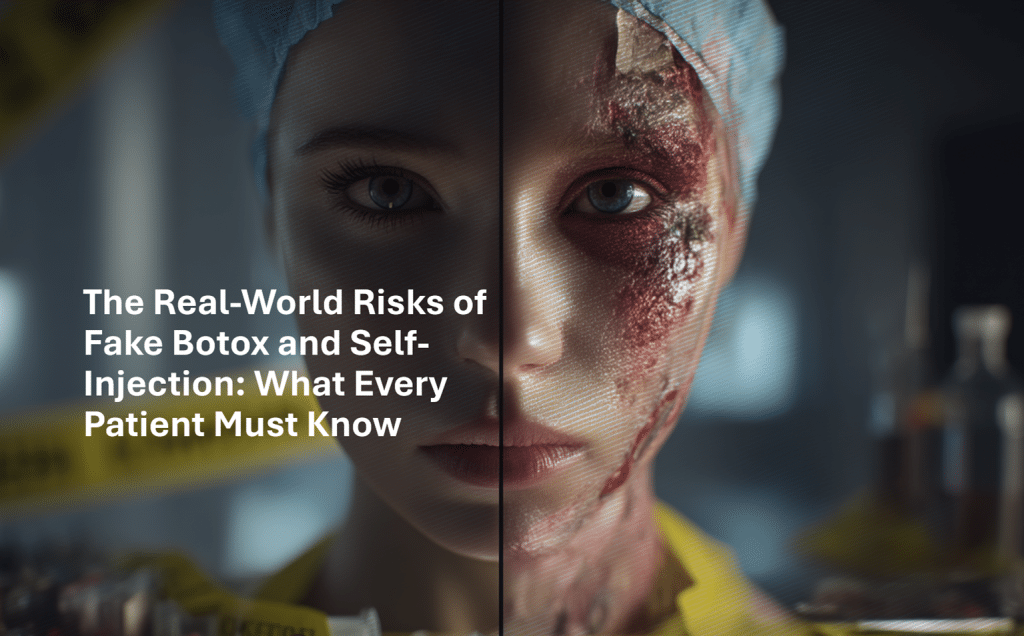
In recent weeks, dozens of people across England have been hospitalised with botulism – a life-threatening condition – after receiving fake Botox injections. According to the UK Health Security Agency, there have been 38 confirmed cases in just six weeks, all linked to unlicensed Botox-like substances injected in non-medical settings. These cases highlight the very real risks of fake Botox and self-injection – two growing threats in aesthetic medicine.
As a medical doctor with 30 years of clinical experience and 15 years working with aesthetic injectables, I feel compelled to raise a serious red flag.
Because these cases – and a desperate email I received from someone who self-injected an online “filler” – highlight a dangerous pattern:
People want the benefits of Botox, fillers, and youthful skin – but they want it cheap.
And that desire is costing people their health, their appearance, and in some cases, could cost them their lives.
Case One: Real Consequences from the Risks of Fake Botox and Self-Injection
In the BBC’s coverage of the recent outbreak, we meet Nicola Fairley – a 37-year-old mother of four – who was rushed to A&E after receiving what she thought was Botox. Her face began to droop, her eye swelled shut, and her throat started to close. She developed classic signs of botulism poisoning – a paralysing nerve condition caused by improper or excessive exposure to botulinum toxin.
“Hospitals were running out of anti-toxin,” the report states. “Five patients arrived in a single night in Durham with botulism symptoms.”
The clinics involved were found to have used unlicensed, likely counterfeit products. There is now an ongoing criminal investigation by the MHRA (Medicines and Healthcare products Regulatory Agency).
This wasn’t a rare, freak event. This was predictable, preventable, and rooted in one thing: cutting costs at the expense of safety.
Case Two: Self-Injection of a £2 Chinese “Filler”
Around the same time, I received a troubling email.
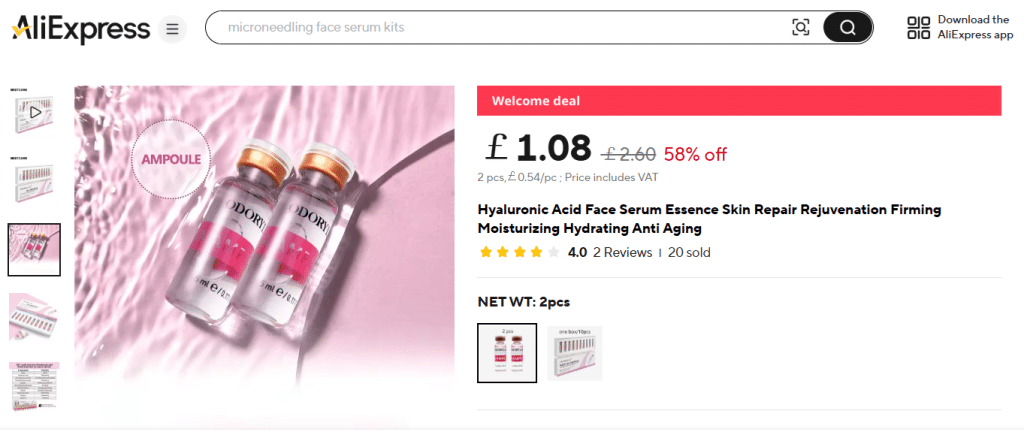
A woman – let’s call her S.C. – wrote to say she had “accidentally injected” a product called Odorylan HA Ampoule into her face. The product, which costs under £2 per vial on a Chinese e-commerce site, is marketed as a topical serum – not an injectable filler. Yet she injected it deeply across multiple sites on her face.
(Side note: Can you really “accidentally” inject yourself in seven to ten different places? That takes syringes, planning, and intent. Let’s be honest – this was not an accident. It was a deliberate and dangerously misinformed act.)
The result? High fever. Painful, red, itchy subcutaneous lumps. Skin discolouration. A burning sensation. Swelling.
And now, ongoing facial damage.
She pleaded for help, asking whether hyaluronidase could dissolve the substance. But this wasn’t a legitimate hyaluronic acid product. It was an unknown compound, likely not HA at all – meaning hyaluronidase wouldn’t work.
Once this kind of product is injected, there may be no medical way to reverse it. The only option left is a surgical incision and manual removal – a complicated, painful, and expensive process.
So Why Do People Do It?
Honestly, I struggle to understand how people can be so reckless with their own health.
Would you swallow an unlabelled pill from a stranger to save money on antibiotics?
Would you undergo surgery in a garage because the price was half that of a hospital?
Of course not. And yet, many are happy to let untrained people inject unregulated substances into their face – to save a few hundred pounds.
What You’re Paying For in a Safe Clinic
Yes, original injectable products are more expensive. But here’s why:
- They are regulated, tested, and tracked by agencies like the MHRA.
- The companies behind them protect their brand reputation, which means consistency and accountability.
- Legitimate clinics invest in:
I, for example, operate in a CQC-registered clinic, and bring over three decades of medical experience to my patients. That’s what you’re paying for:
Safety. Accountability. Trust.
How You Can Stay Safe
I’ve created the Safe Aesthetic Treatments Campaign and a free Patient Checklist to help you avoid dangerous providers.
This includes the exact questions you should ask your practitioner before any injectable treatment. If they cannot answer them confidently – walk away.
You only have one face. Don’t gamble with it.
If You Can’t Afford It Right Now – Wait.
If you can’t afford safe aesthetic treatments right now, that’s okay. Wait. Save up.
Skip a few coffees or avocado sandwiches. Postpone your next shopping spree. Reallocate your budget.
But don’t inject fake Botox, and don’t buy £2 Chinese filler from the internet. That’s not frugal – that’s dangerous.
Because as we’ve seen, the cheap route often ends up being the most expensive.
One of these patients will now require plastic or maxillofacial surgery to have every injection site opened and the foreign substance physically removed from her face. Imagine the cost. Imagine the pain.
Don’t Chase Cheap. Chase Quality.
This is a call for common sense.
For personal responsibility.
For respecting your body.
And it’s a call for industry regulation, because no one should be able to inject another person with an unknown substance for profit.
Until we get there, please – educate yourself. Ask questions. Verify credentials. And remember:
If it’s too cheap to be true, it’s probably not safe.
Stay safe. Stay smart.
Dr. Bela
Chiswick Clinic
Dermatologist | Aesthetic Medicine | Skin Health