May is Melanoma Awareness Month.
And this blog post is for one person only.
It’s for the person who already has a melanoma growing silently on their skin – without knowing it.
You might be reading this while going about your life as usual – working, planning your week, spending time with family. You feel healthy. You’re not thinking about skin cancer. But melanoma doesn’t wait for symptoms. When you finally feel it – when it starts itching, bleeding, or changing – it may already be too late.
That’s why melanoma awareness can save lives. And that’s why this message is so important.
What is Melanoma?
Melanoma is a type of skin cancer that develops from pigment-producing cells called melanocytes. Unlike many other cancers, it often starts on the surface – on the skin – where it can be seen and treated early. But if left unnoticed, melanoma can grow deeper, spread throughout the body, and become life-threatening.
In fact, melanoma is responsible for the majority of skin cancer-related deaths worldwide.
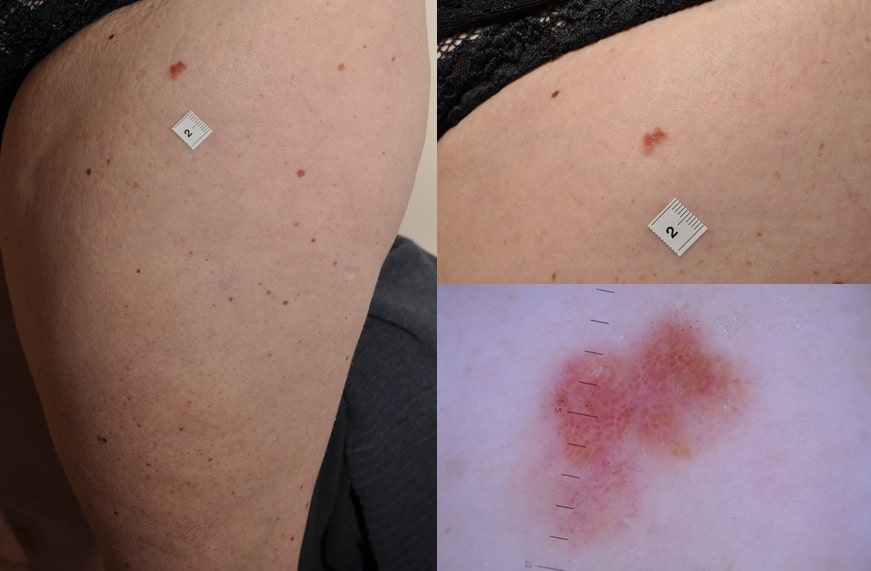
What Does Melanoma Look Like?
You’re not looking for “just any mole.”
You’re looking for the ugly duckling – the odd one out.
It may be:
- Darker than your other moles
- Bigger (usually, but not always)
- Irregular in shape or colour
- Raised, itchy, bleeding (late signs!), or just different in a way that catches your eye
When we teach patients how to check their skin, we often say: stand back and look from a distance. If one spot pops out, if your eye keeps returning to it—don’t ignore that feeling.
That might be your early warning.
Why Early Detection Matters
As a clinic led by Dr. Bela, who has worked with melanoma patients since 1998 – including at the National Institute of Oncology in Budapest – we’ve seen how different the outcomes are when melanoma is caught early versus late.
- Early-stage melanoma can often be cured with simple surgical removal.
- Late-stage melanoma may already be spreading by the time symptoms appear. It can lead to invasive surgeries, immunotherapy, chemotherapy – or worse.
This is why we believe melanoma awareness is not just education. It is prevention.
How to Check Your Skin
You only need 5 to 10 minutes.
Do it alone or with someone you trust—a partner, a parent, a child. Here’s how:
- Stand in front of a mirror in a well-lit room
- Use a hand mirror for hard-to-see areas (like your back)
- Look at your whole body—scalp, nails, soles, between toes and fingers
- Focus on finding the mole that looks different from the rest
- If something looks odd—book a mole check immediately
What if You Have a Lot of Moles?
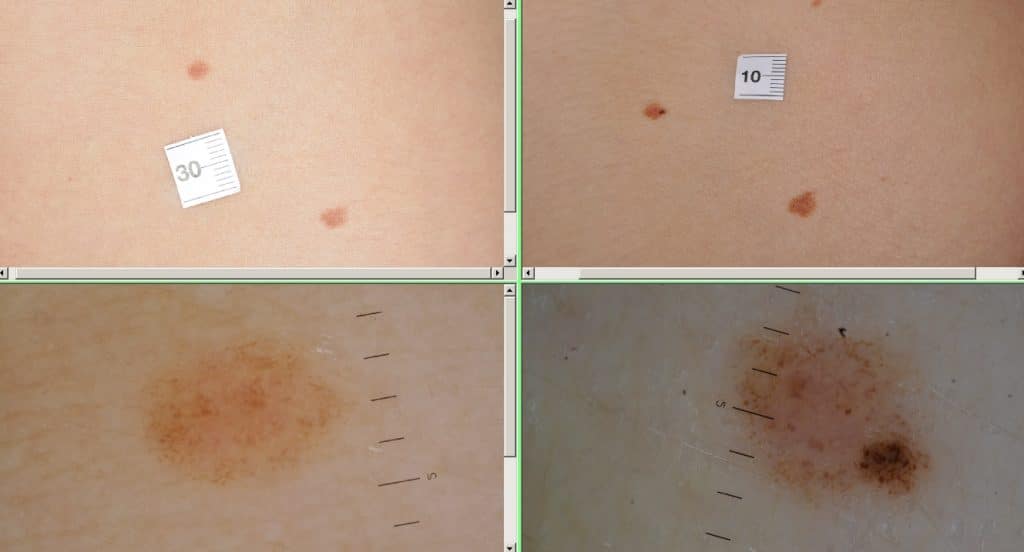
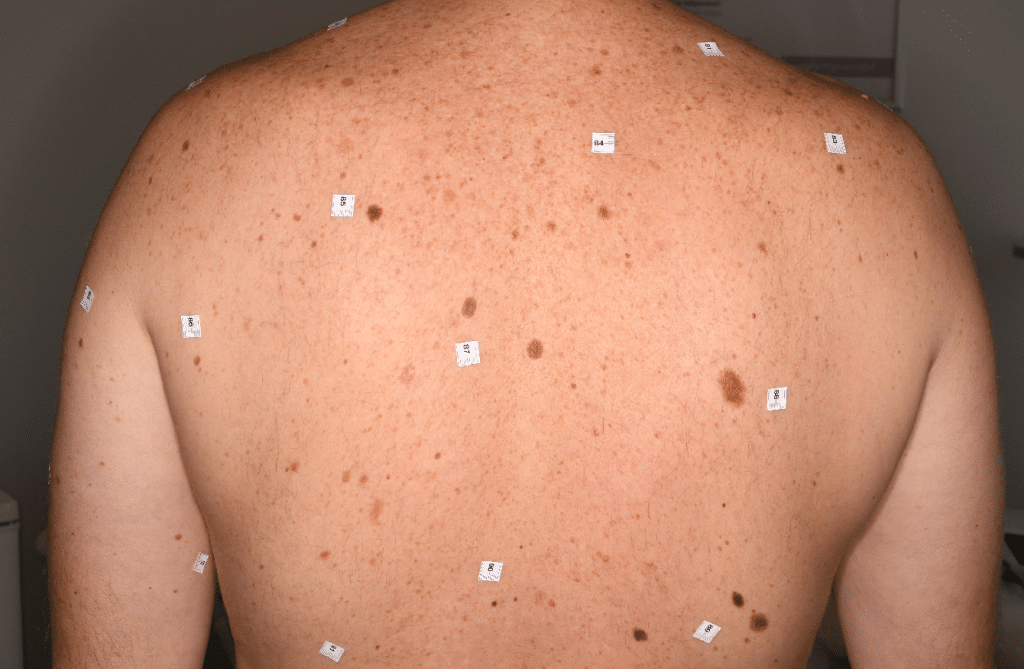
If you have a high number of moles or if they’re irregular (atypical), it can be hard to spot the dangerous ones. That’s exactly when a professional mole check becomes critical.
At the Chiswick Clinic, we offer advanced mole checks using dermoscopy and digital photography, backed by Dr. Bela’s nearly three decades of experience in skin cancer screening. We provide:
- Full-body mole checks with dermatoscopic analysis
- Mole mapping for high-risk patients
- Mole removals for suspicious lesions
- Clear, reassuring communication at every step
Real Lives at Risk — Real Lives Saved
Dr. Bela has witnessed the heartbreaking consequences of missed melanomas—not just in hospitals but in personal life, too. He lost a childhood friend to melanoma. These experiences are why he has dedicated his medical career to early detection and prevention.
At the Chiswick Clinic, we treat each mole check as a chance to change a life’s course for the better—sometimes even to save it.
Melanoma Awareness: Your Action Plan
If you remember just one thing from this post, let it be this:
Don’t wait for a mole to bleed, itch, or change. By then, it may already be dangerous.
Check your skin now. If you see something odd, book a professional mole check.
Melanoma Awareness Month is a reminder. But melanoma itself does not wait for the right month.
Book Your Mole Check in Chiswick
Located in the heart of West London, the Chiswick Clinic is your trusted partner for skin health, mole mapping, and melanoma prevention. We welcome patients from Chiswick, Hammersmith, Richmond, and surrounding areas.
Let today be the day you take a small step that could make a life-saving difference.
👉 Book a Mole Check Appointment
or
📞 Call us today on 020 3841 4800