At Chiswick Clinic, introducing a new treatment isn’t something we take lightly. Every service we offer undergoes a rigorous process of thorough research, practical training, patient testing, and outcome evaluation — all guided by a commitment to evidence-based care and patient safety.
Recently, we explored a promising treatment called Daylight Photodynamic Therapy (D-PDT) using AMELUZ® 78mg/g gel, a technique designed for the treatment of mild to moderate actinic keratosis and field cancerisation — common signs of chronic sun damage. The treatment concept is simple, patient-friendly, and well-supported in theory. However, after two full trials, I have decided not to offer Daylight PDT at our clinic. This blog post explains why.
What Is Daylight Photodynamic Therapy (D-PDT)?
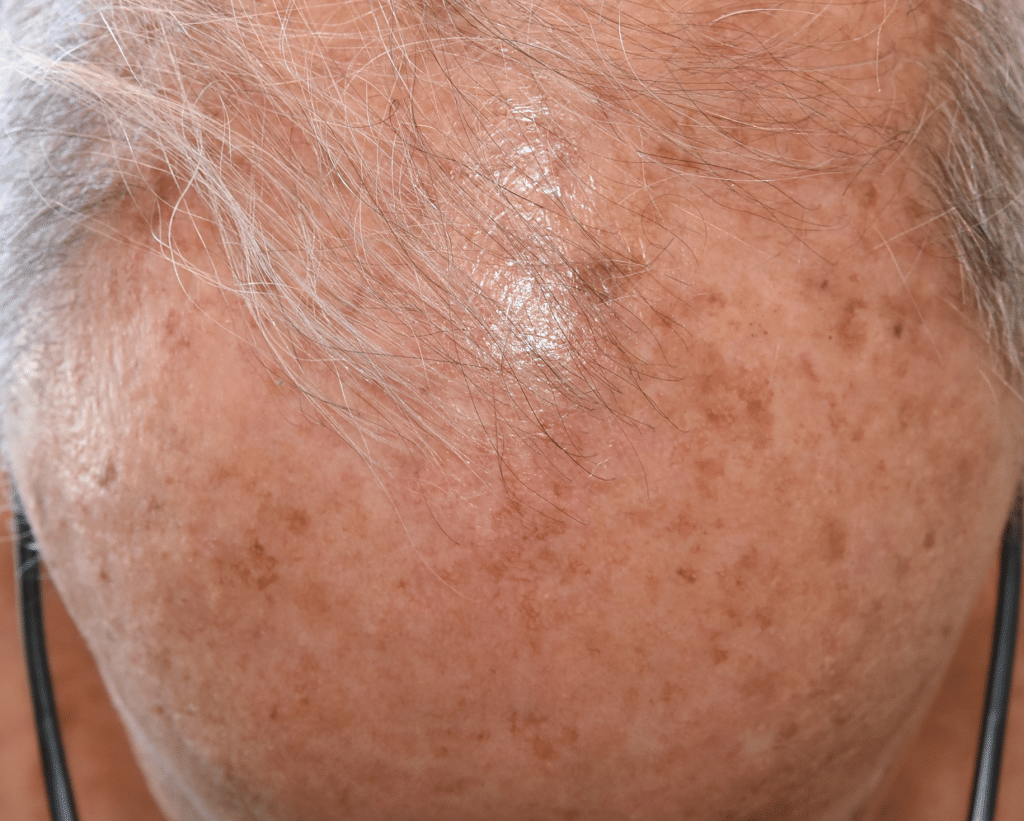
Daylight Photodynamic Therapy is a non-invasive treatment that selectively destroys abnormal skin cells, like those found in actinic keratosis. Actinic keratoses are precancerous skin lesions caused by long-term sun exposure, commonly appearing as rough, scaly patches on sun-exposed areas such as the face and scalp.
Instead of using conventional medical lamps, D-PDT relies on natural daylight as the light source. The treatment involves applying a photosensitising agent — in this case, AMELUZ® gel, which contains 5-aminolaevulinic acid (5-ALA) — that is activated when exposed to sunlight. Once absorbed into the skin and activated by light, the gel produces reactive oxygen species (ROS), which destroy only the damaged, abnormal cells while leaving healthy tissue untouched.
It’s an appealing method for treating large sun-damaged areas with minimal pain, downtime, or disruption. Studies report up to 70% lesion clearance within 12 weeks, and a 91.8% patient satisfaction rate, making it an increasingly popular option, especially in Europe and Australia.
Why Daylight PDT Appealed to Me
As a dermatologist with nearly 30 years of experience in diagnosing and treating sun damage and skin cancers, I’m always looking for gentler, smarter alternatives to older, more aggressive treatment options. For patients with field cancerisation — where an entire region of skin shows signs of chronic photodamage — traditional spot treatments like cryotherapy or Efudix cream often fall short. They either leave unaffected skin irritated, require multiple sessions, or involve prolonged recovery.
Daylight PDT promises a different approach. Patients receive the gel at the clinic, then go for a 2-hour walk in the sun, allowing the treatment to work painlessly during normal activity. Afterward, they avoid direct sun for 48 hours. It sounded ideal — effective, tolerable, and cosmetically gentle.
How We Trialled It at Chiswick Clinic
In order to offer D-PDT with AMELUZ® safely and professionally, I followed the gold standard protocol:
- In-depth literature review of available studies on Daylight PDT and AMELUZ®.
- On-site training and treatment delivery under the supervision of an experienced NHS nurse with over 20 years of photodynamic therapy experience.
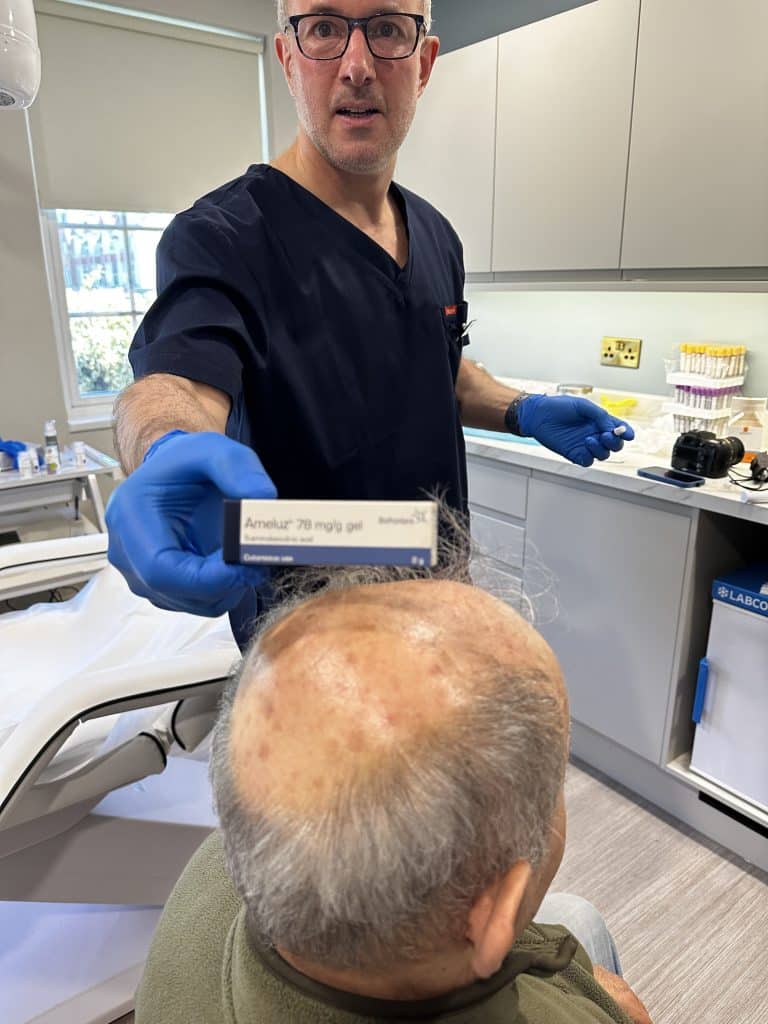
- Procurement of AMELUZ® gel from the authorised distributor in the UK.
- Selection of two ideal model patients with clear clinical signs of field cancerisation.
Each patient had a large area of sun-damaged skin with multiple Olsen Grade 1–2 actinic keratoses. The goal was to test this treatment in precisely the kind of patient it was designed for.
Perfect Conditions, Precise Protocols — But No Results
On both treatment days, weather conditions were perfect: sunny, warm, and fully compliant with treatment requirements. SPF was used as directed before and after exposure, and every step of the procedure was carefully documented and supervised.
The protocol was followed to the letter:
- Pre-treatment consultation with medical history review.
- Application of chemical sunscreen 10 minutes prior.
- Skin preparation with alcohol wipes.
- Careful, uniform application of AMELUZ® gel.
- Daylight exposure for exactly two hours.
- Post-treatment cleansing and 48-hour sun protection instructions.
- Detailed photo and video documentation before and after.
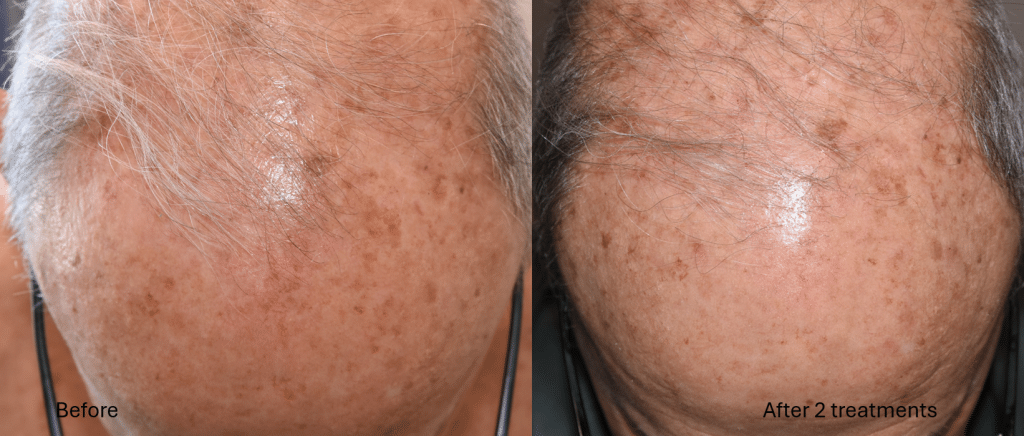
And yet — nothing happened.
No redness. No peeling. No visible skin reaction. No reduction in actinic keratoses. Nothing.
In both cases, there was no clinical evidence of the treatment working.
We Gave It a Second Chance — Still Nothing
Following the first treatments, I contacted the manufacturer in Germany, the UK distributor, and the supervising NHS nurse. I explained the lack of reaction and shared full documentation.
Their response: “This can happen. Repeat the treatment.”
One of the patients understandably declined a second round of treatment. The other patient agreed, and I performed the second treatment myself, again following all protocols exactly. I even documented the reaction over the following days with high-resolution photographs and video.
Still — no reaction whatsoever.
Why I’m Not Offering D-PDT at This Time
While I remain open to emerging technologies and novel therapies, I also have a responsibility to my patients, my clinic, and my time.
I cannot justify continuing with a treatment that, despite following all published guidelines, failed entirely in two ideal cases. When a treatment works, we should see something — even a mild reaction — especially under supervised, ideal conditions.
In this instance, two well-selected patients, perfect execution, perfect weather, and professional oversight yielded zero results.
That is not a treatment I can stand behind.
I’m Sharing This to Help Others — and Invite Dialogue
The purpose of this blog post isn’t to dismiss Daylight PDT or AMELUZ® as useless. My experience is based on only two patients, and I’m fully aware that other clinics may have different results.
But if you’re a practitioner who has seen positive outcomes using AMELUZ® with daylight exposure, I would love to hear from you. Please reach out. Share your images. Show me what worked, and how.
And if you’re a clinic considering investing in D-PDT, I hope this blog post helps you make a more informed decision. Trials like these take time, training, and patient cooperation — and I hope to save others from repeating an effort that may not deliver.
What Does This Mean for Patients?
If you’re a patient struggling with sun damage or actinic keratosis, don’t be discouraged. There are many effective treatment options available — from cryotherapy and prescription creams to laser resurfacing and conventional photodynamic therapy.
At Chiswick Clinic, we continue to offer tried-and-tested treatments that are safe, effective, and supported by strong clinical outcomes. Each patient’s case is unique, and we’ll always take the time to find the right solution for your skin health and lifestyle.
Why Transparency Matters
It’s easy to talk about success stories — the amazing before-and-afters, the patient testimonials, the glowing skin. But real medicine also includes honest discussions of failure. This blog post is just that: a truthful account of a treatment that didn’t work, despite best efforts.
That’s not something to hide — that’s something to learn from.
Our Commitment to Evidence-Based Practice
At Chiswick Clinic, every treatment we offer must meet one simple standard: it has to work.
That means:
- Backed by evidence.
- Delivered under proper conditions.
- Producing consistent, visible results.
- Making patients feel better, safer, and healthier.
When a treatment doesn’t meet those standards — even if it’s trendy or widely promoted — we don’t offer it. Your time, health, and trust are far too valuable.
Thank you for reading. If you have insights to share, questions about actinic keratosis treatments, or want to explore safe and proven options, please don’t hesitate to reach out.